4 Mapping Bulk data
4.1 Quickstart
These are the main functions to map a bulk RNA-sequencing dataset on the corticogenesis resource. This implies that the data to be mapped have already been normalized. Below we will report a detailed description and examples on how to perform mapping and further related analyses.
#STEP 1: load libraries
library(neuRoDev)

#STEP 2: load data
corticogenesis_sce <- corticogenesis.sce(directory = '~/Downloads')
data <- readRDS('my_data') #choose your data object

#STEP 3: mapping
mapped_bulk <- mapNetwork(net = corticogenesis_sce,
                               new_profiles = data)

#STEP 4: inspect mapping
mapped_bulk$new_plot
mapped_bulk$annotation$Barplot
mapped_bulk$annotation$Best.Annotation
4.2 Loading necessary libraries and data
4.2.2 Loading the networks necessary objects
corticogenesis_sce <- corticogenesis.sce(directory = '~/Downloads')
neurogenesis_sce <- neurogenesis.sce(directory = '~/Downloads')
gliogenesis_sce <- gliogenesis.sce(directory = '~/Downloads')
4.3 Mapping a bulk cell RNAseq dataset
This example dataset from Gordon et al. (2021) can be download here (ExtraData_Tutorial folder). For the scope of the analyses, we pre-processed the data, removing batch-effect using the package sva, and then computed Counts Per Million (CPM) (log-normalized, saved in logcounts). Pre-processing steps can be done differently and depending on your own dataset characteristics, but the following steps shown in this tutorial will apply to any bulk RNAseq samples. A lack of correct pre-processing steps may affect the results and interpretation of the following analyses.
bulk_sce <- readRDS('~/Downloads/bulk_sce.rds')This dataset contains bulk RNAseq expression of organoid samples at different time points. To focus on the differences between differentiation times, we averaged samples with the same differentiation day. If you were interested in variability between replicates, this step could be avoided.
bulk_average <- neuRoDev:::get_column_group_average(logcounts(bulk_sce),
                                                    bulk_sce$`differentiation day`)
Differently than scRNAseq dataset mapping (see Chapter Mapping Single-cell data), bulk RNAseq datasets don’t need further processing into transcriptional profiles, as they already represent a pool of cells sequenced together. Hence, bulk samples can be directly mapped using the mapNetwork function, that requires the following main inputs:
-
net= the reference network to use. -
new_profiles= the transcriptional profiles to map.
Other useful inputs can be checked by ?mapNetwork
mapped_bulk <- mapNetwork(net = corticogenesis_sce,
                          new_profiles = bulk_average)
We can now visualize the network with the mapped clusters on top:
mapped_bulk$new_plot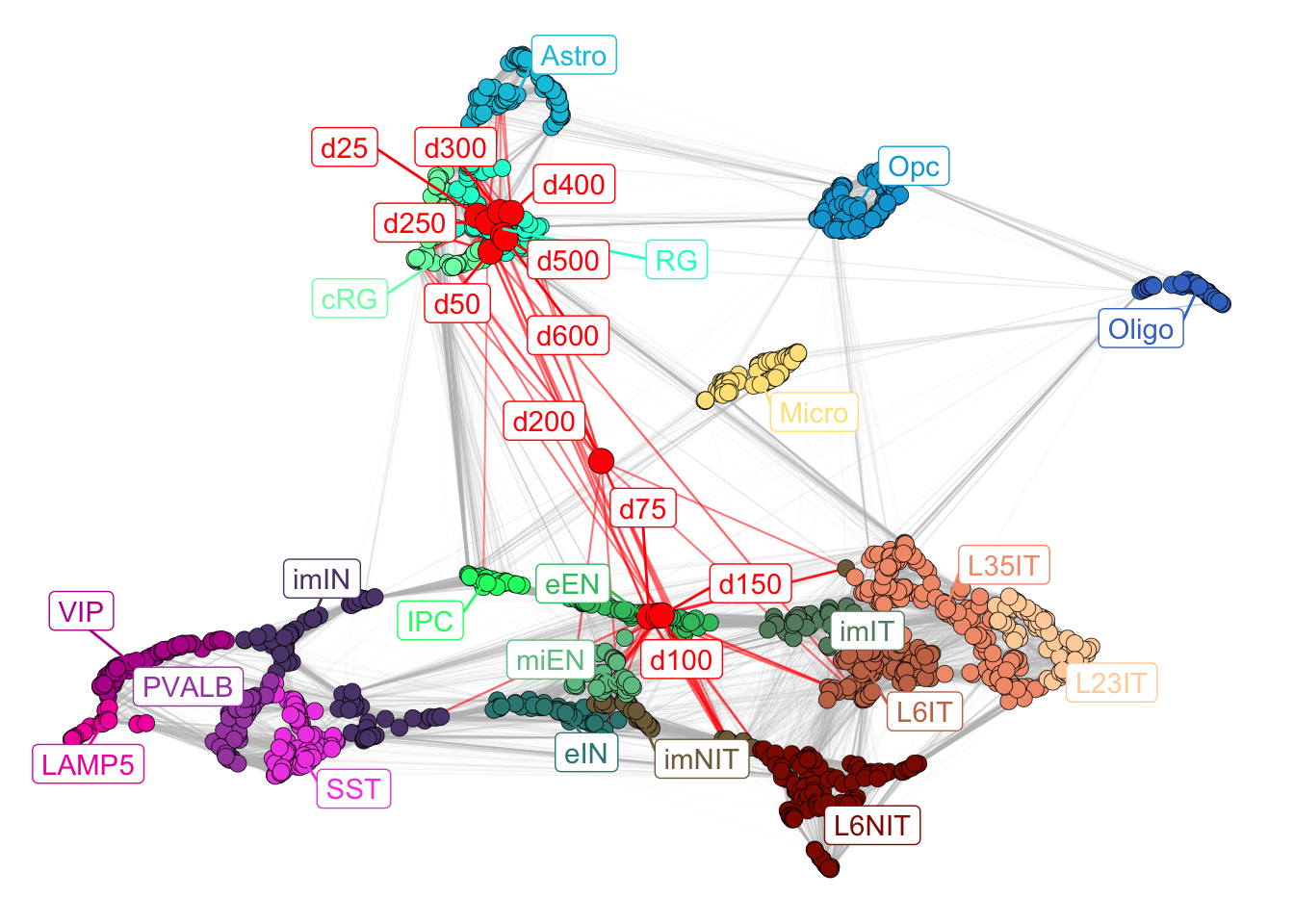
Figure 4.1: Corticogenesis network with mapped samples.
From the visualization, we can already appreciate how the samples at early days (d25, d50) map close to radial glia clusters, moving towards immature neurons in days 75, 100 and 150. From day 200 we can see that there is a unexpected transcriptional switch and samples return to map closer to radial glia. This could mean either that they went back to a more undifferentiated state, or that they start looking more like mature glia (astrocytes in particular, which are similar to radial glia). To investigate more in depth these differences, it is possible to leverage the analyses tools described below.
Since newly mapped samples will locate close to the most similar reference clusters, it is possible to qualitatively understand the most similar subclass for each mapped point. To quantify this similarity, we developed a score per subclass per mapped sample, using the 15 most similar reference clusters’ annotations (the number of reference clusters to use can be set by changing n_nearest in the mapNetwork function). The score can be visualized by:
mapped_bulk$annotation$Barplot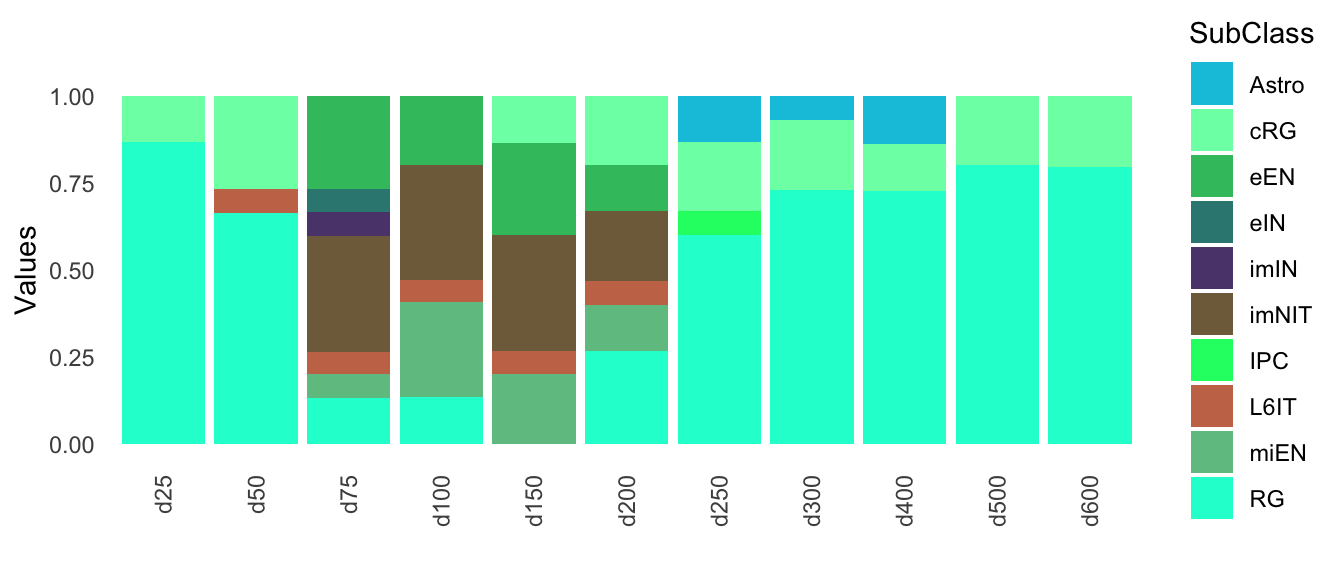
Figure 4.2: Annotation scores across samples
Days 250, 300 and 400 have a small resemblance to astrocytes, but this is lost in days 500 and 600.
To get a single label for each mapped cluster, we can take the maximum of these scores. This depicts the most similar subclass among the closest neighbors.
mapped_bulk$annotation$Best.Annotation
#>     d25     d50     d75    d100    d150    d200    d250
#>    "RG"    "RG" "imNIT" "imNIT" "imNIT"    "RG"    "RG"
#>    d300    d400    d500    d600
#>    "RG"    "RG"    "RG"    "RG"
The same quantification can be done for stages, either by specifying color_attr = 'Stages' in the mapNetwork function, or by running the annotateMapping function, which requires the following inputs:
-
net= the reference network to use. -
new_cor= the correlation between mapped points and reference clusters, which can be found inmapped_object$new_cor. -
color_attr= the annotation label to use, in this case ‘Stages’.
Our mapping strategy allows the mapping of any expression matrix, thus we added a quantification of the mapping confidence, described with two diverse measures:
confidence (
mapped_object$annotation$Mapping.Confidence) for each mapped point, showing the average of the 15 highest correlation values that the mapped point has with the reference clusters.global confidence (
mapped_object$annotation$Global.Confidence), describing the average confidence across all mapped point.
The confidence values can be accessed in the following way:
# global confidence
mapped_bulk$annotation$Global.Confidence
#> [1] 0.6783803

# per cluster confidence
mapped_bulk$annotation$Mapping.Confidence
#>       d25       d50       d75      d100      d150      d200
#> 0.7468790 0.7425336 0.7363235 0.7106007 0.6891449 0.6729147
#>      d250      d300      d400      d500      d600
#> 0.6236117 0.6462351 0.6386074 0.6045623 0.6507705
We can see that generally the mapped samples have relatively high confidence, but it decreases in the last days compared to the first.
An additional analysis involves projecting the samples onto the eTraces, to evaluate how closely they resemble clusters with different levels of gene expression. The function to perform such analysis is map_eTrace, which requires the following inputs:
-
net= the reference network to use. -
mapped_obj= the result of mapNetwork. - the inputs required to run plot_eTrace (see the Chapter Analysis tools), mainly
genes,expression_enrichment, andclusters_comparison.
We can visualize the expression of preferentially expressed genes in the relevant subclasses and see how the mapped samples relate to the reference clusters. We curated a list of gene sets preferentially expressed in each reference subclass or subclass group, available here (PreferentialExpression folder).
corticogenesis_pe_genes <- readRDS("~/Downloads/corticogenesis_subclass_preferential_genes.rds")
neurogenesis_pe_genes <- readRDS("~/Downloads/neurogenesis_subclass_preferential_genes.rds")
gliogenesis_pe_genes <- readRDS("~/Downloads/gliogenesis_subclass_preferential_genes.rds")
map_eTrace(net = corticogenesis_sce,
           mapped_obj = mapped_bulk,
           genes = corticogenesis_pe_genes$RG,
           main = 'RG',
           expression_enrichment = TRUE,
           clusters_comparison = TRUE)

map_eTrace(net = corticogenesis_sce,
           mapped_obj = mapped_bulk,
           genes = corticogenesis_pe_genes$miEN.imNIT.eEN,
           main = 'immEN',
           expression_enrichment = TRUE,
           clusters_comparison = TRUE)

map_eTrace(net = corticogenesis_sce,
           mapped_obj = mapped_bulk,
           genes = corticogenesis_pe_genes$L6IT.L6NIT.L35IT.L23IT.SST.VIP.PVALB.LAMP5,
           main = 'matNEU',
           expression_enrichment = TRUE,
           clusters_comparison = TRUE)

map_eTrace(net = corticogenesis_sce,
           mapped_obj = mapped_bulk,
           genes = corticogenesis_pe_genes$Astro,
           main = 'Astrocytes',
           expression_enrichment = TRUE,
           clusters_comparison = TRUE)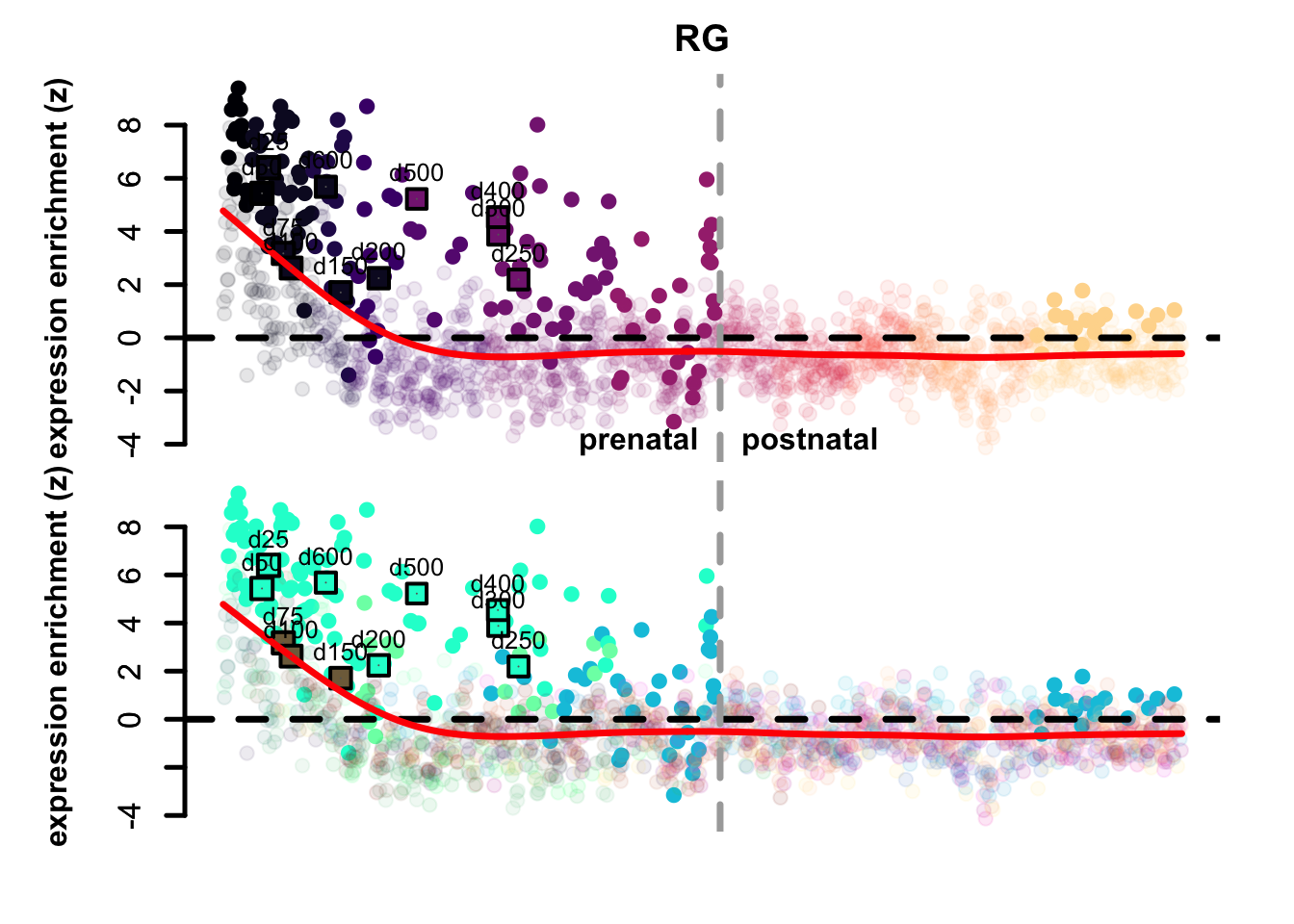
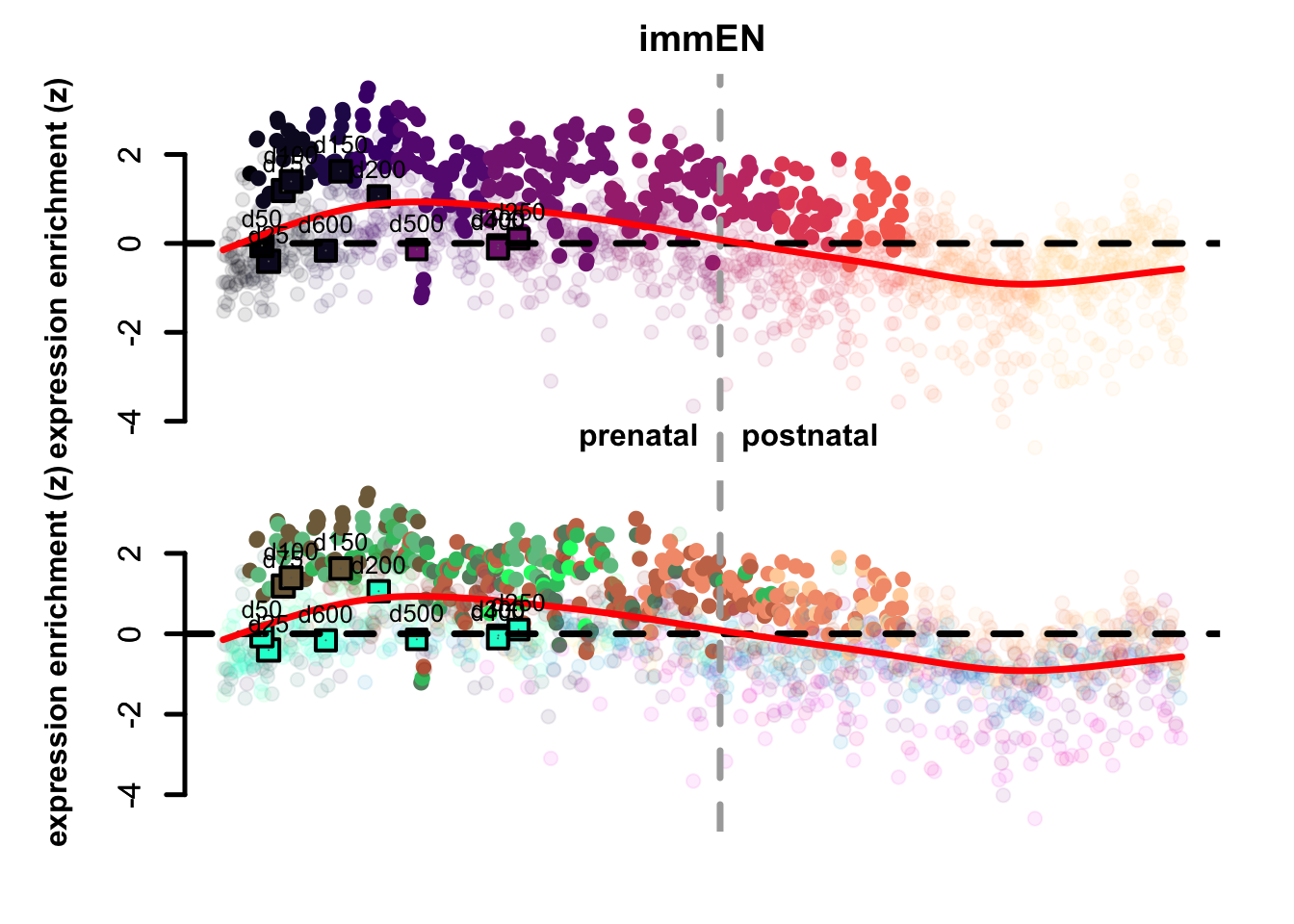
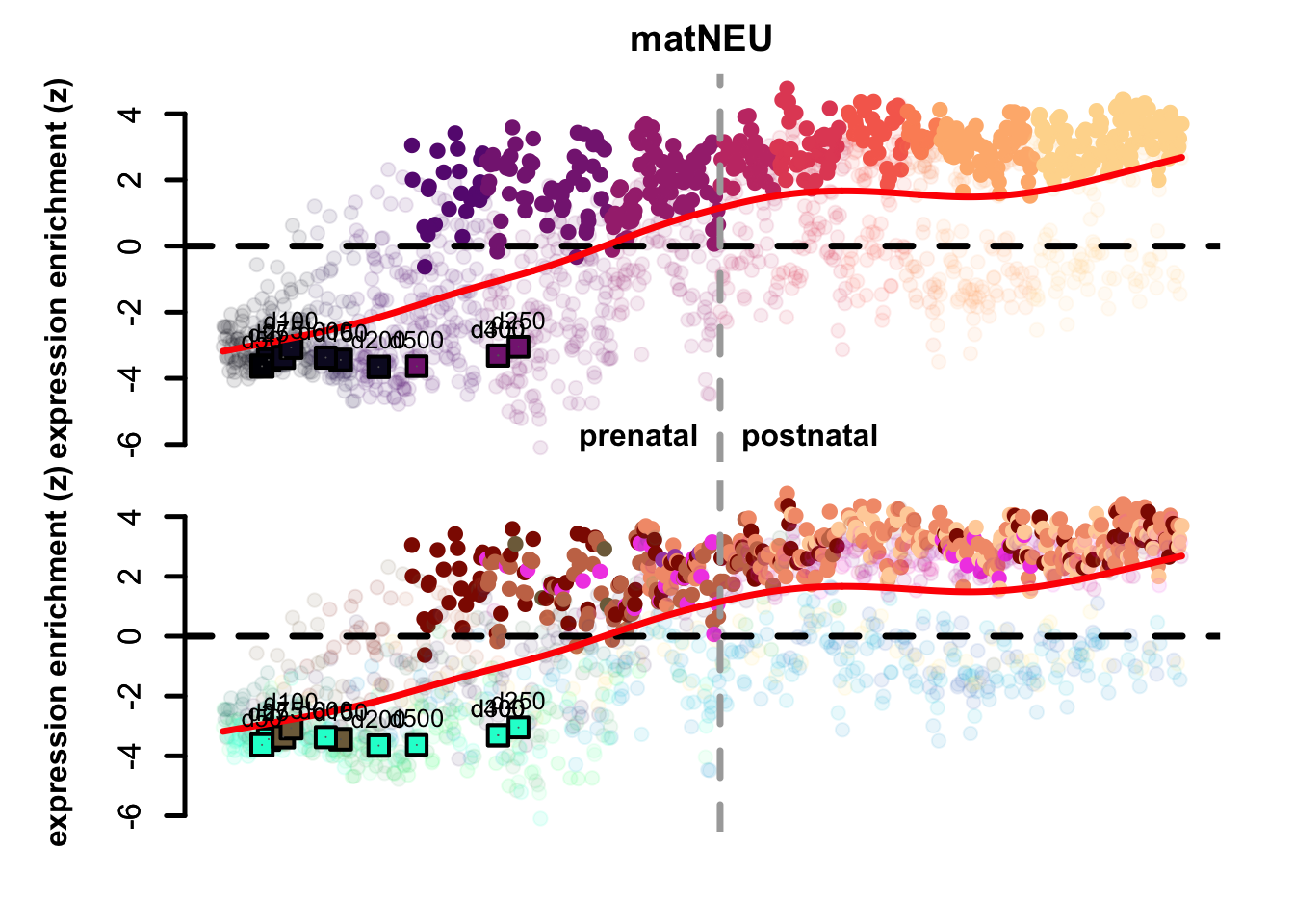
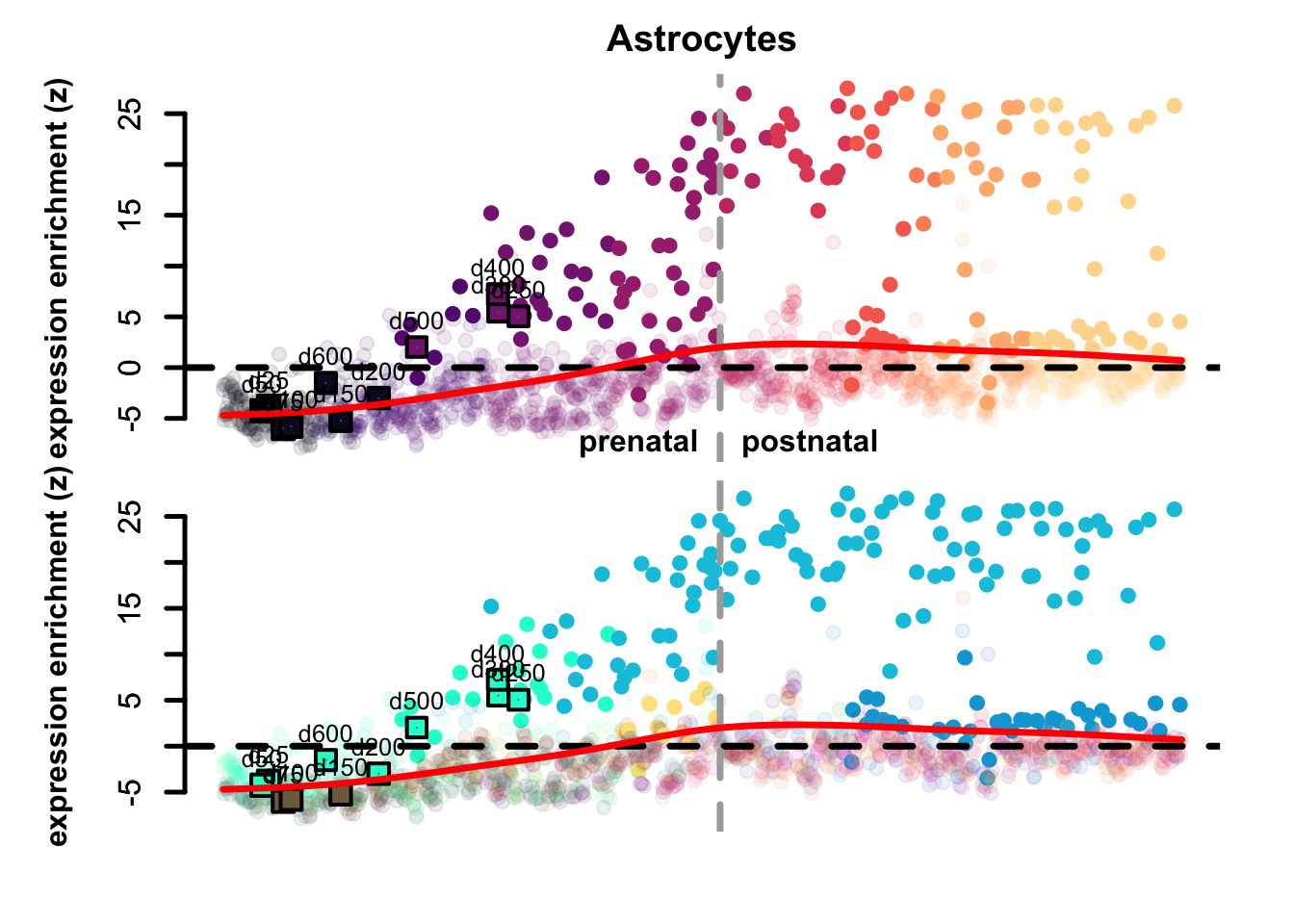
Figure 4.3: Preferential genes eTrace in corticogenesis and mapped points.
The eTrace of radial glia markers describes the same pattern shown when looking at the mapping on the network: the mapped points form a circle from early time points to late ones, that goes back to showing resemblance to early radial glia clusters. This further indicates that not only they look more similar to radial glia than neurons, but also that they look more similar to early radial glia compared to late.
By looking instead at the eTrace of immature excitatory neuron markers, we can see that samples from d75 to d200 are above the average line (d200 being the lowest), pointing to the fact that only these time points show a similarity to immature neurons. By plotting instead the eTrace of mature neurons, no sample shows particularly high values, suggesting that organoids do not recapitulate the full maturity described by in vivo samples. Lastly, the eTrace of astrocyte markers shows that days from 250 to 400 are indeed higher than the other samples (but also late radial glia clusters show relatively high values), but clearly that days 500 and 600 are much lower.
We show here a function (plotTrends) to visualize the expression of preferentially expressed genes in the bulk samples, as an example of further possible analyses that can be performed with the provided resources. plotTrends is not included in the main functions of the package, but can still be accessed by neuRoDev:::plotTrends. The function requires the following inputs:
-
net= the reference network to use. -
pref_exp_genes= the preferentially expressed genes list. -
sce= the external object in the form of aSingleCellExperimentobject. -
profiles= the actual expression matrix used for the mapping. -
coldata= where to find the information of the replicates used for averaging. -
subclass= if indicated as a vector it selects only a subset of reference subclasses. Defaults to all subclasses. -
ylim= the lower and upper limits of the y-axis (defaults to NULL, which goes back to the automatic R plot ylim). -
together= defines if the different preferentially expressed genes should be plotted together (adjustylimaccordingly) (defaults to FALSE). -
relative= if TRUE, the expression is scaled from 0 to 1 (defaults to FALSE).
neuRoDev:::plotTrends(net = corticogenesis_sce,
           pref_exp_genes = corticogenesis_pe_genes,
           subclass = c('Astro', 'cRG'),
           sce = bulk_sce,
           profiles = bulk_average,
           coldata = 'differentiation day',
           together = TRUE,
           ylim = c(2.5, 5.5))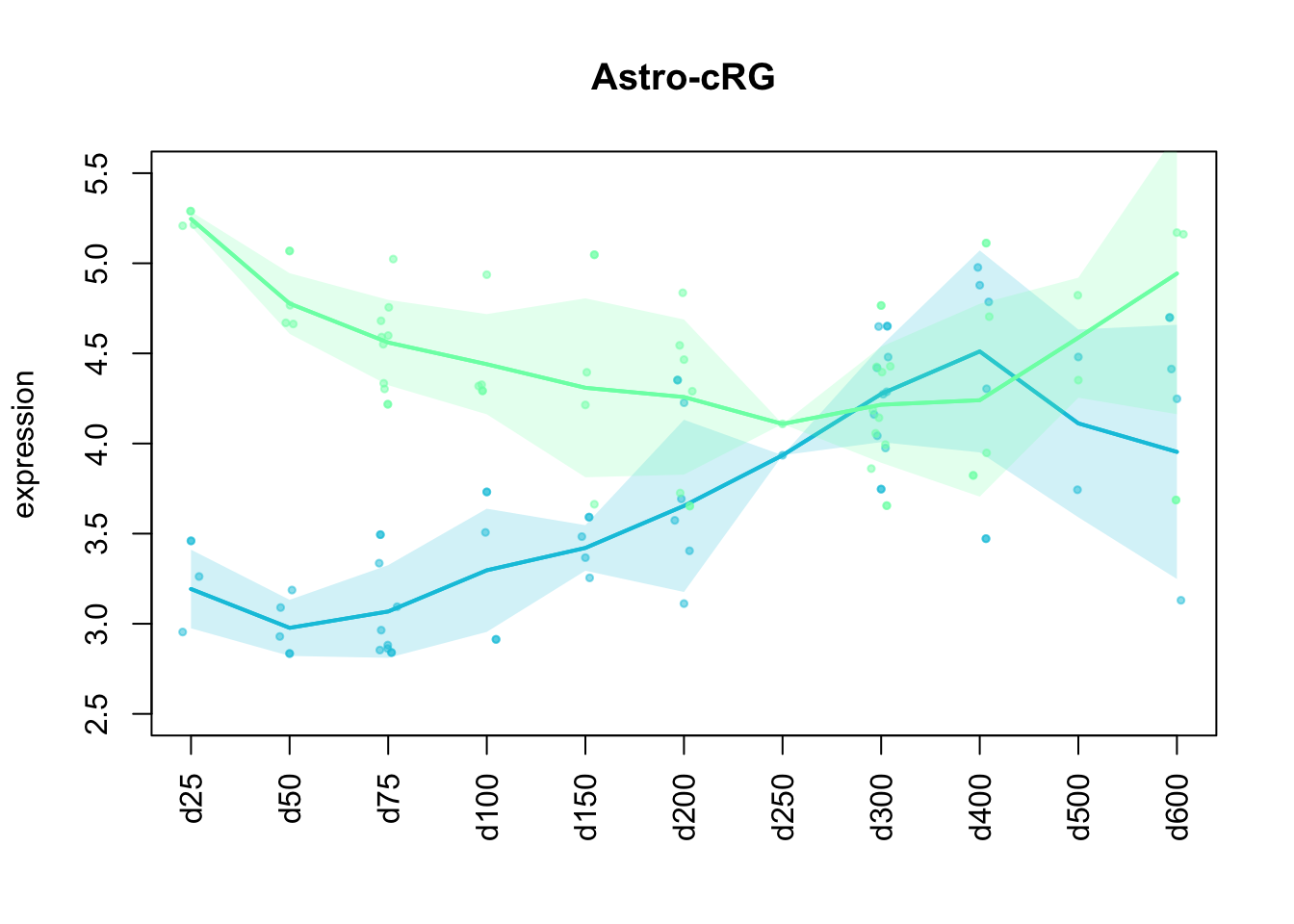
Figure 4.4: Preferential genes of astrocytes and cycling radial glia expression in mapped data points.
Astrocyte markers increase up to day 400, but then decrease again and are overcome by cycling radial glia markers at the last time points (d500, d600).
This is consistent with the expression levels of GO processes manually curated in our resource. These can be downloaded here (PreferentialExpression folder) and represent curated pathways relevant in corticogenesis and neurogenesis.
corticogenesis_GO <- readRDS('~/Downloads/corticogenesis_GOBP_genesets.rds')
neurogenesis_GO <- readRDS('~/Downloads/neurogenesis_GOBP_genesets.rds')
To assess the expression levels of these processes, we first have to obtain the average expression of those gene sets in the mapped data:
bulk_cortico_GOBP <- do.call(rbind, lapply(corticogenesis_GO, function(g) {

  g <- g[which(g %in% rownames(bulk_sce))]

  Matrix::colMeans(bulk_average[g,])

}))

rownames(bulk_cortico_GOBP) <- gsub(" \\(GO:[0-9]+\\)$", "", rownames(bulk_cortico_GOBP))
bulk_cortico_GOBP <- bulk_cortico_GOBP[,mixedorder(colnames(bulk_cortico_GOBP))]
Then, we can visualize the relative expression in a heatmap.
To compare this expression with the preferential expression of the gene sets in our resource, it is possible to download the preferential expression of Gene Ontology Biological Processes (BP), Molecular Functions (MF), and Cellular Components (CC) here (PreferentialExpression folder). Each object is a list containing preferential expression scores in one of the three reference networks in the three ontologies (BP, MF, CC). Each element of each list contains the activity (activity) derived from Gene Set Variation Analysis (one value per gene set in each cluster) and the preferential expression scores (preferential; one value per gene set in each subclass).
corticogenesis_preferential_GO <- readRDS('~/Downloads/corticogenesis_preferential_GO.rds')
neurogenesis_preferential_GO <- readRDS('~/Downloads/neurogenesis_preferential_GO.rds')
gliogenesis_preferential_GO <- readRDS('~/Downloads/gliogenesis_preferential_GO.rds')
Show the code (simplifying labels)
cortico_subclass_groups <- colnames(corticogenesis_preferential_GO$GO_Biological_Process_2025$preferential)
cortico_subclass_groups[which(cortico_subclass_groups %in% c('L23IT', 'L35IT', 'L6IT', 'L6NIT'))] <- 'matEN'
cortico_subclass_groups[which(cortico_subclass_groups %in% c('LAMP5', 'SST', 'PVALB', 'VIP'))] <- 'matIN'
cortico_subclass_groups[which(cortico_subclass_groups %in% c('imIT', 'imNIT', 'eEN', 'miEN'))] <- 'immEN'
cortico_subclass_groups[which(cortico_subclass_groups %in% c('eIN', 'imIN'))] <- 'immIN'
cortico_subclass_groups[which(cortico_subclass_groups %in% c('Opc', 'Oligo', 'Astro'))] <- 'maGlia'
cortico_subclass_groups[which(cortico_subclass_groups %in% c('Micro'))] <- 'miGlia'
cortico_subclass_groups[which(cortico_subclass_groups %in% c('RG', 'cRG', 'IPC'))] <- 'Prog'

cortico_subclass_groups <- factor(cortico_subclass_groups, levels = c('Prog', 'immEN', 'immIN', 'matEN', 'matIN', 'maGlia', 'miGlia'))

cortico_gobp_groups <- factor(c(rep('Astro', 4), rep('Oligo', 3), rep('Opc', 3), rep('OligoGlia', 2), rep('matEN', 4), rep('matIN', 4), rep('immEN', 4), rep('Micro', 4), rep('Prog', 4), rep('Stress', 4)), levels = c('Prog', 'immEN', 'matEN', 'matIN', 'Opc', 'Oligo', 'OligoGlia', 'Astro', 'Micro', 'Stress'))

cortico_gobp_pe <- corticogenesis_preferential_GO$GO_Biological_Process_2025$preferential[names(corticogenesis_GO),]
rownames(cortico_gobp_pe) <- gsub(" \\(GO:[0-9]+\\)$", "", rownames(cortico_gobp_pe))
Show the code (plotting heatmap)
ht1 <- Heatmap(
  cortico_gobp_pe,
  name = 'preferential\nexpression',
  width = unit(ncol(cortico_gobp_pe) * 4.2, 'mm'),
  height = unit(nrow(cortico_gobp_pe) * 4.2, 'mm'),
  show_row_dend = FALSE,
  show_column_dend = FALSE,
  row_title_rot = 0,
  column_title_rot = 90,
  column_split = cortico_subclass_groups,
  cluster_column_slices = FALSE,
  row_split = cortico_gobp_groups,
  cluster_row_slices = FALSE,
  column_title_gp = gpar(fontsize = 0)
)

ht2 <- Heatmap(
  t(scale(t(bulk_cortico_GOBP))),
  name = 'scaled\nexpression',
  width = unit(ncol(bulk_cortico_GOBP) * 4.2, 'mm'),
  cluster_columns = FALSE, right_annotation = rowAnnotation(max = anno_barplot(apply(bulk_cortico_GOBP, 1, max), gp = gpar(fill = 'black')), annotation_name_side = 'top', annotation_name_rot = 0)
)

ht_list <- ht1 + ht2

draw(ht_list, heatmap_legend_side = "left")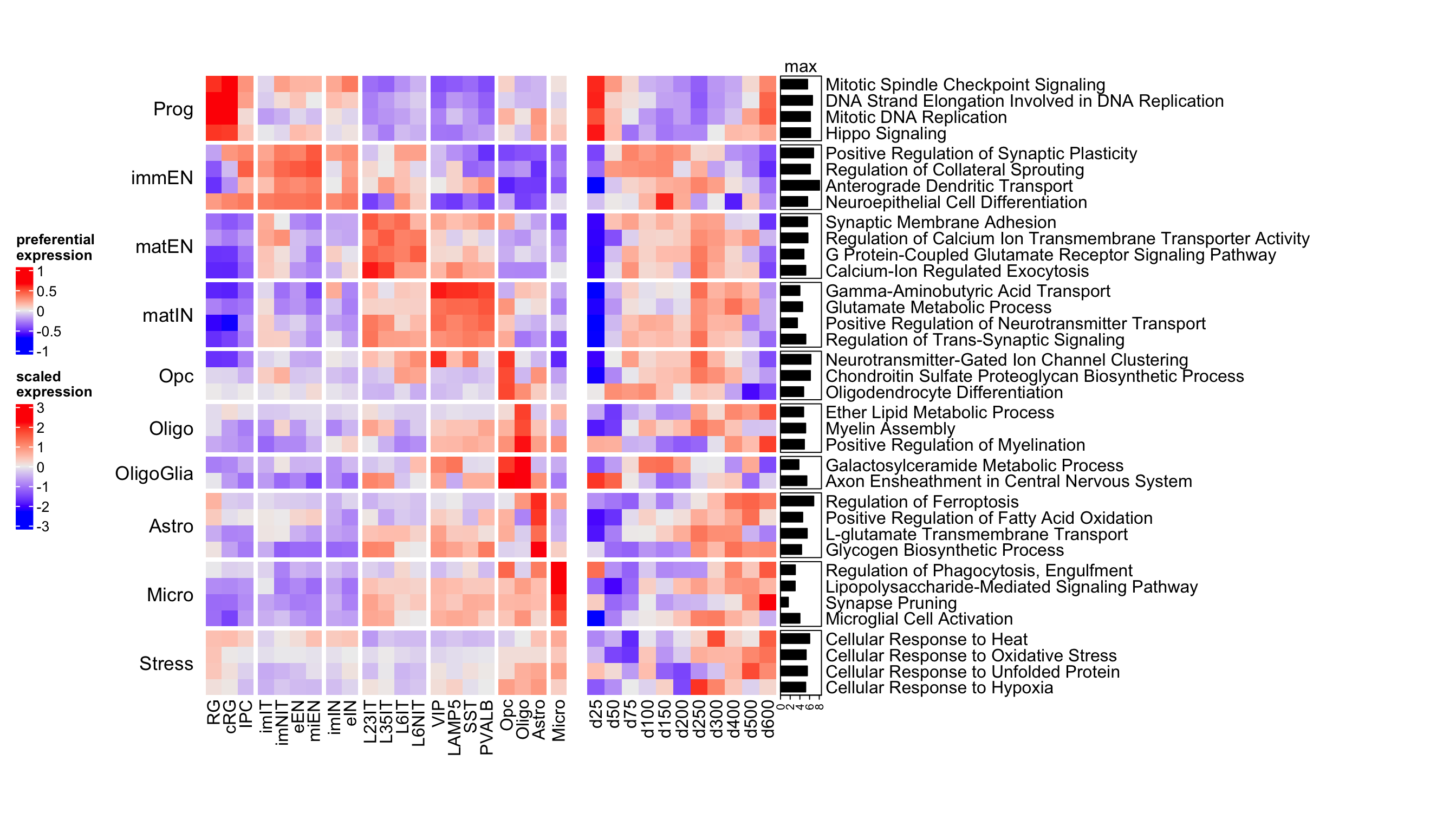
Figure 4.5: Heatmap of corticogenesis-specific GO biological processes in resource and mapped samples.
From this heatmap we can see that radial glia biological processes are highly expressed in the first few time points, as well as in the last two. This, together with a high expression of stress-related processes (which increases as time progresses) suggests that indeed the last days are more stressed rather than being more similar to astrocytes. Also neuronal processes start around day 75, but decrease around days 300-400.
The same type of analysis can be done with the neurogenesis network:
bulk_neuro_GOBP <- do.call(rbind, lapply(neurogenesis_GO, function(g) {

  g <- g[which(g %in% rownames(bulk_average))]

  Matrix::colMeans(bulk_average[g,])

}))

rownames(bulk_neuro_GOBP) <- gsub(" \\(GO:[0-9]+\\)$", "", rownames(bulk_neuro_GOBP))
bulk_neuro_GOBP <- bulk_neuro_GOBP[,mixedorder(colnames(bulk_neuro_GOBP))]
Show the code (simplifying labels and plotting heatmap)
neuro_gobp_pe <- neurogenesis_preferential_GO$GO_Biological_Process_2025$activity[names(neurogenesis_GO),]

neuroTrends <- do.call(cbind, lapply(rownames(neuro_gobp_pe), function(i) smooth.spline(1:length(neuro_gobp_pe[i,]), neuro_gobp_pe[i,], spar = 1)$y))
colnames(neuroTrends) <- rownames(neuro_gobp_pe)

neuroTrends <- t(neuroTrends)[names(neurogenesis_GO),]
neuroTrends <- neuroTrends[order(apply(neuroTrends, 1, which.max), Matrix::rowMeans(neuroTrends)),]

rownames(neuroTrends) <- gsub(" \\(GO:[0-9]+\\)$", "", rownames(neuroTrends))

stage_palette <- unique(neurogenesis_sce$Stages_color)
names(stage_palette) <- unique(neurogenesis_sce$Stages)

h1 <- Heatmap(t(scale(t(neuroTrends))),
              cluster_columns = F,
              cluster_rows = F,
              bottom_annotation = HeatmapAnnotation(df=data.frame(stage=neurogenesis_sce$Stages),
                                                    col=list(stage=stage_palette),
                                                    show_legend = F,
                                                    show_annotation_name = F),
              name = 'inferred expression\n(z scaled)',
              height = unit(100, 'mm'),
              width = unit(30, 'mm'),
              row_names_max_width = unit(20, "mm"))

ht2 <- Heatmap(
  t(scale(t(bulk_neuro_GOBP[rownames(neuroTrends),]))),
  name = 'scaled\nexpression',
  width = unit(ncol(bulk_neuro_GOBP) * 4.2, 'mm'),
  cluster_columns = FALSE, right_annotation = rowAnnotation(max = anno_barplot(apply(bulk_neuro_GOBP[rownames(neuroTrends),], 1, max), gp = gpar(fill = 'black'))), , row_names_max_width = unit(20, "mm")
)

ht_list <- h1 + ht2
draw(ht_list,
     heatmap_legend_side = "left")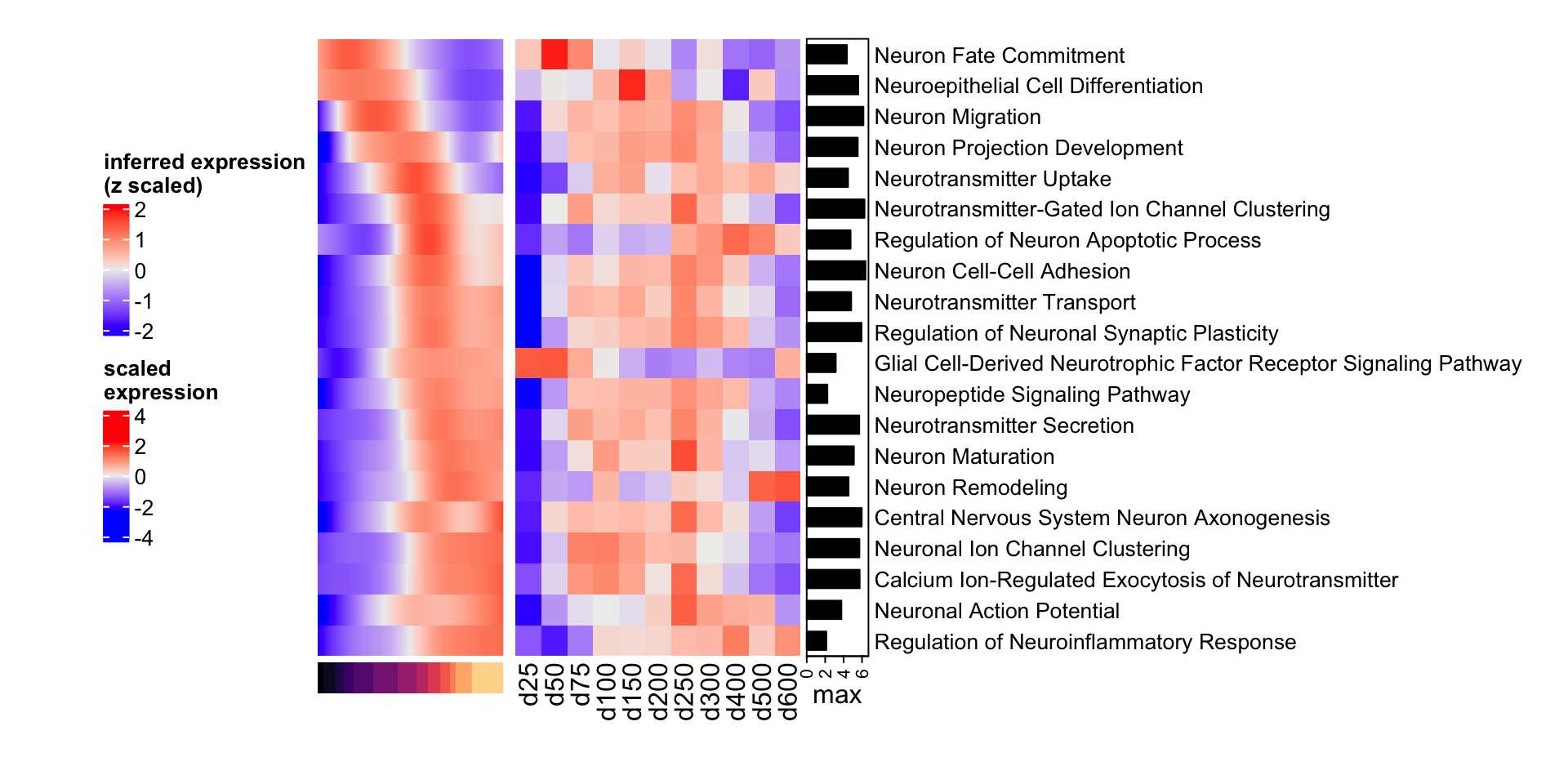
Figure 4.6: Heatmap of neuroogenesis-specific GO biological processes in resource and mapped samples.
We can see that neuroinflammatory response regulation increases over time, as well as regulation of neuron apoptotic process.
Another approach to confirm our findings is to obtain gene markers for each sample using the edgeR and limma packages and plot those genes in the eTraces.
We can obtain an edgeR object in the following way:
dge_obj <- DGEList(counts=counts(bulk_sce),
                   samples=cbind(colData(bulk_sce),
                                 bulk_sce$`differentiation day`))

keep <- filterByExpr(dge_obj,
                     group=bulk_sce$`differentiation day`)

dge_obj <- dge_obj[keep, , keep.lib.sizes=FALSE]

dge_obj <- calcNormFactors(dge_obj)
We can then compute differential expression between differentiation days.
Show the code (differential expression)
unique_groups <- unique(bulk_sce$`differentiation day`)
de_list <- list()

for (g in unique_groups) {
  binary_group <- ifelse(bulk_sce$`differentiation day` == g, g, paste0("Not", g))
  binary_group <- factor(binary_group)

  sample_info <- data.frame('binary_group' = binary_group,
                            'groups' = bulk_sce$`differentiation day`)

  design <- stats::model.matrix(~ binary_group, data=sample_info)

  dge_obj <- estimateDisp(dge_obj,
                          design)

  fit <- glmQLFit(dge_obj,
                  design)

  qlf <- glmQLFTest(fit,
                    coef=2)

  res <- topTags(qlf,
                 n=Inf)

  res <- res$table[which(res$table$FDR < 0.05),]

  if(all(sign(res$logFC) == sign(res$logFC)[1])) {
    de_list[[g]] <- res
    next()
  }

  v1 <- Matrix::colMeans(bulk_average[rownames(res)[which(res$logFC > 0)],])
  v2 <- Matrix::colMeans(bulk_average[rownames(res)[which(res$logFC < 0)],])

  if(rank(v1)[g] > rank(v2)[g]) {
    res <- res[which(res$logFC > 0),]
  } else {
    res <- res[which(res$logFC < 0),]
  }

  de_list[[g]] <- res
}Show the code (filtering genes)
de_list <- lapply(de_list, function(i) {
  i$score <- -log10(i$FDR)
  i <- i[order(i$score, decreasing = T),]
  return(i)
  }
)

markers <- lapply(de_list, function(i) {
  rownames(i)
  }
)

markers <- lapply(markers, function(i) {
  i[which(i %in% rownames(corticogenesis_sce))]
  }
)

markers <- markers[which(unlist(lapply(markers, length)) > 0)]
for(i in names(markers)) {
  g <- markers[[i]]
  g <- g[which(g %in% rownames(corticogenesis_sce))]
  plot_eTrace(net = corticogenesis_sce, genes = g, main = i)
}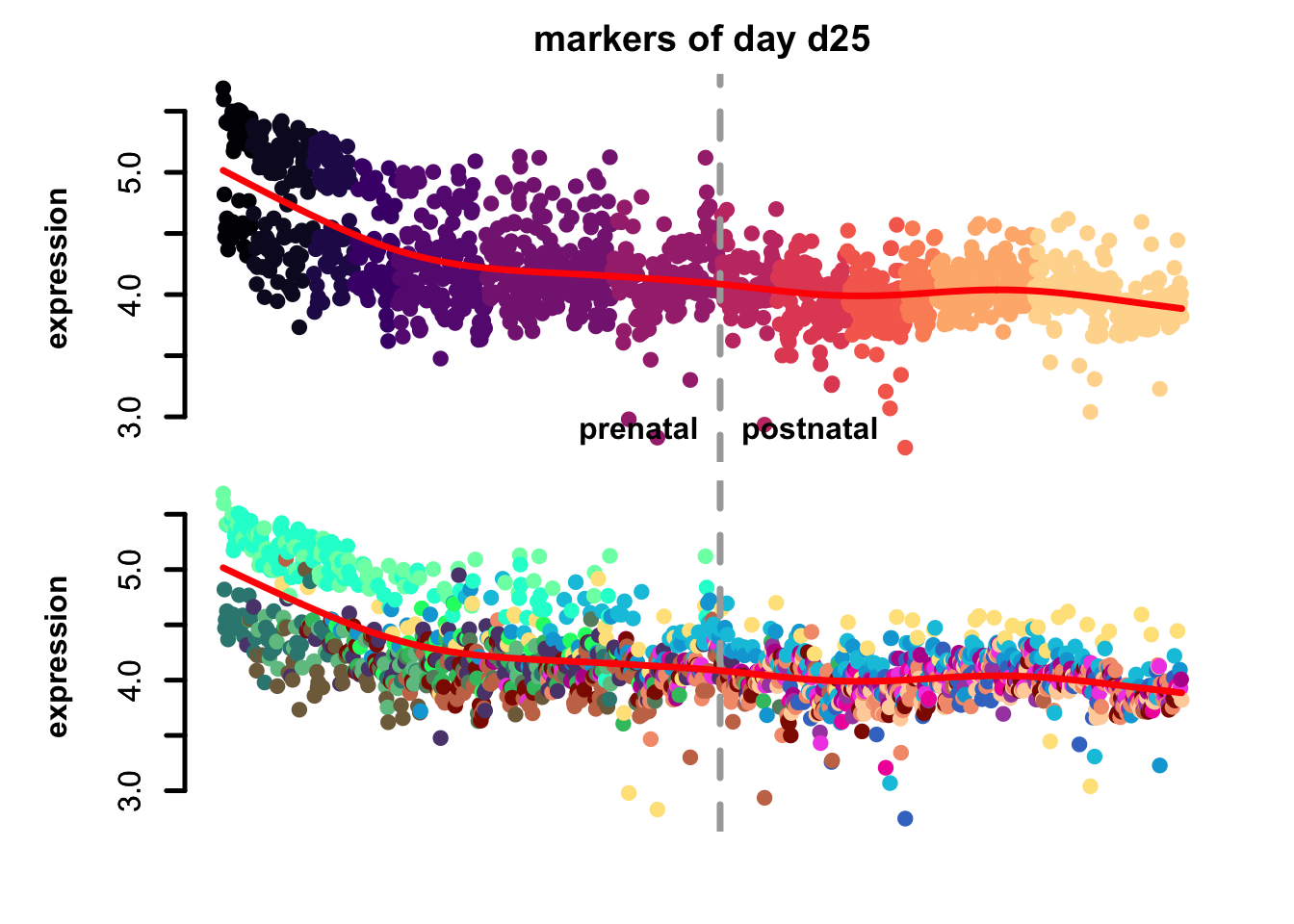
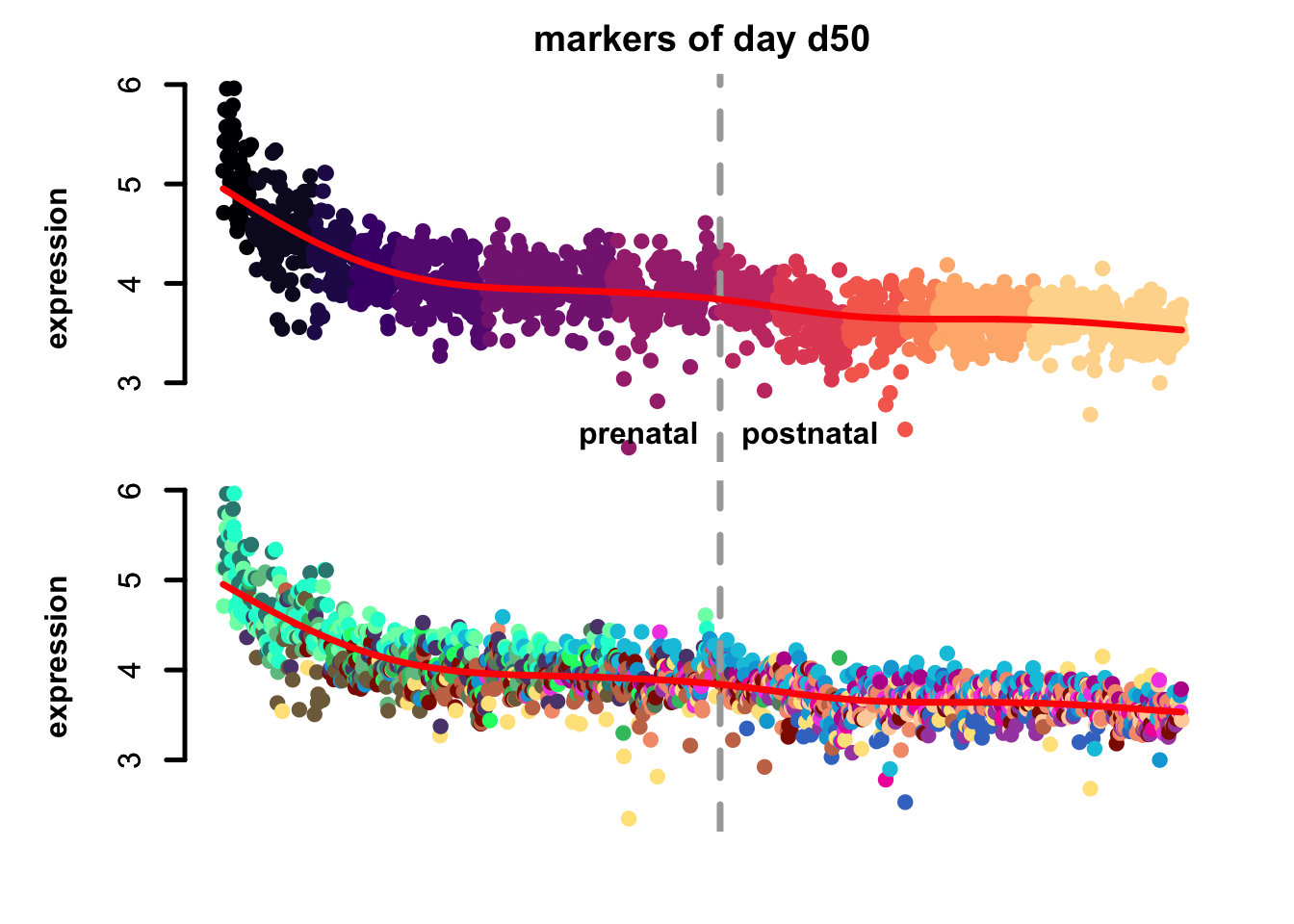
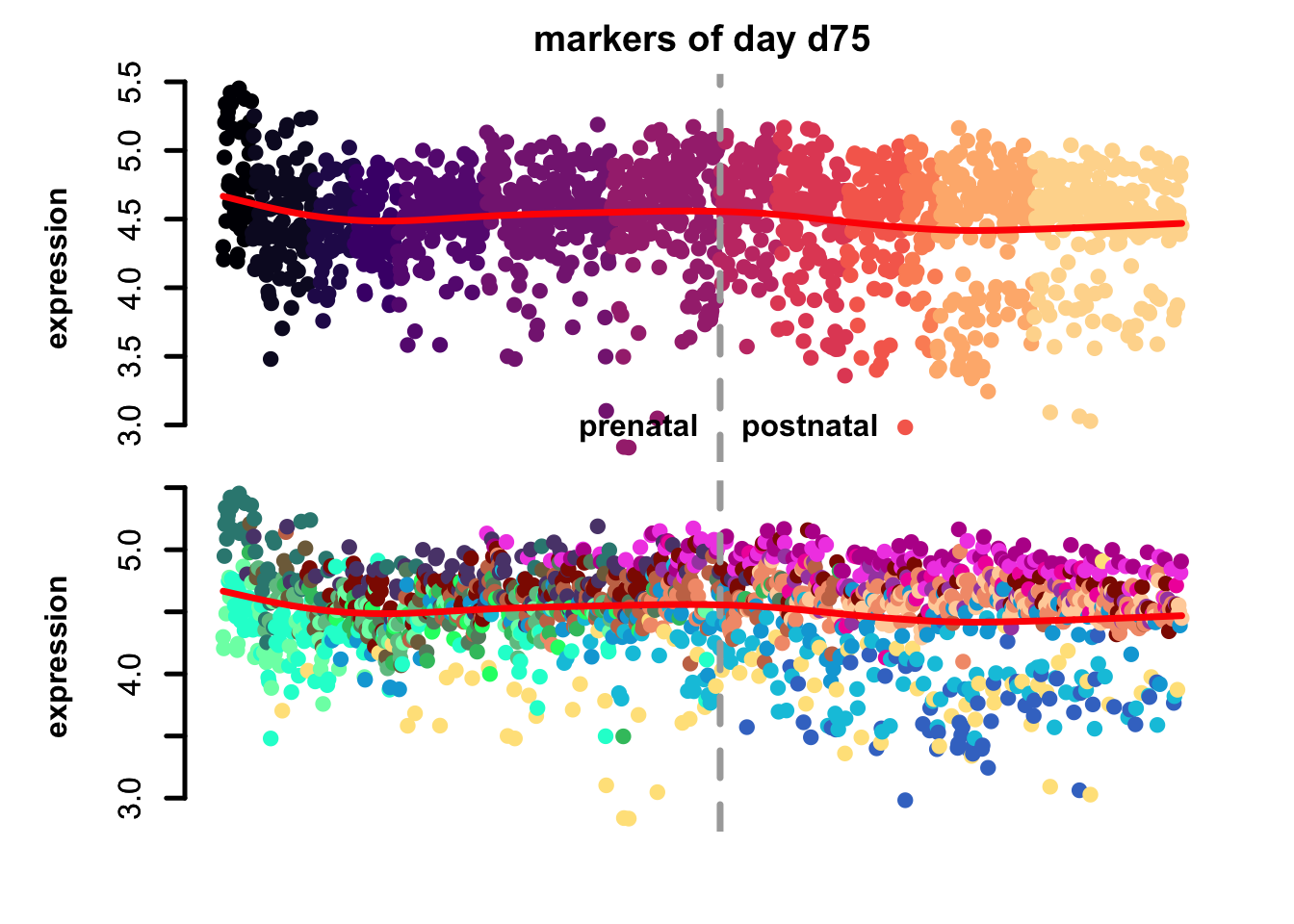
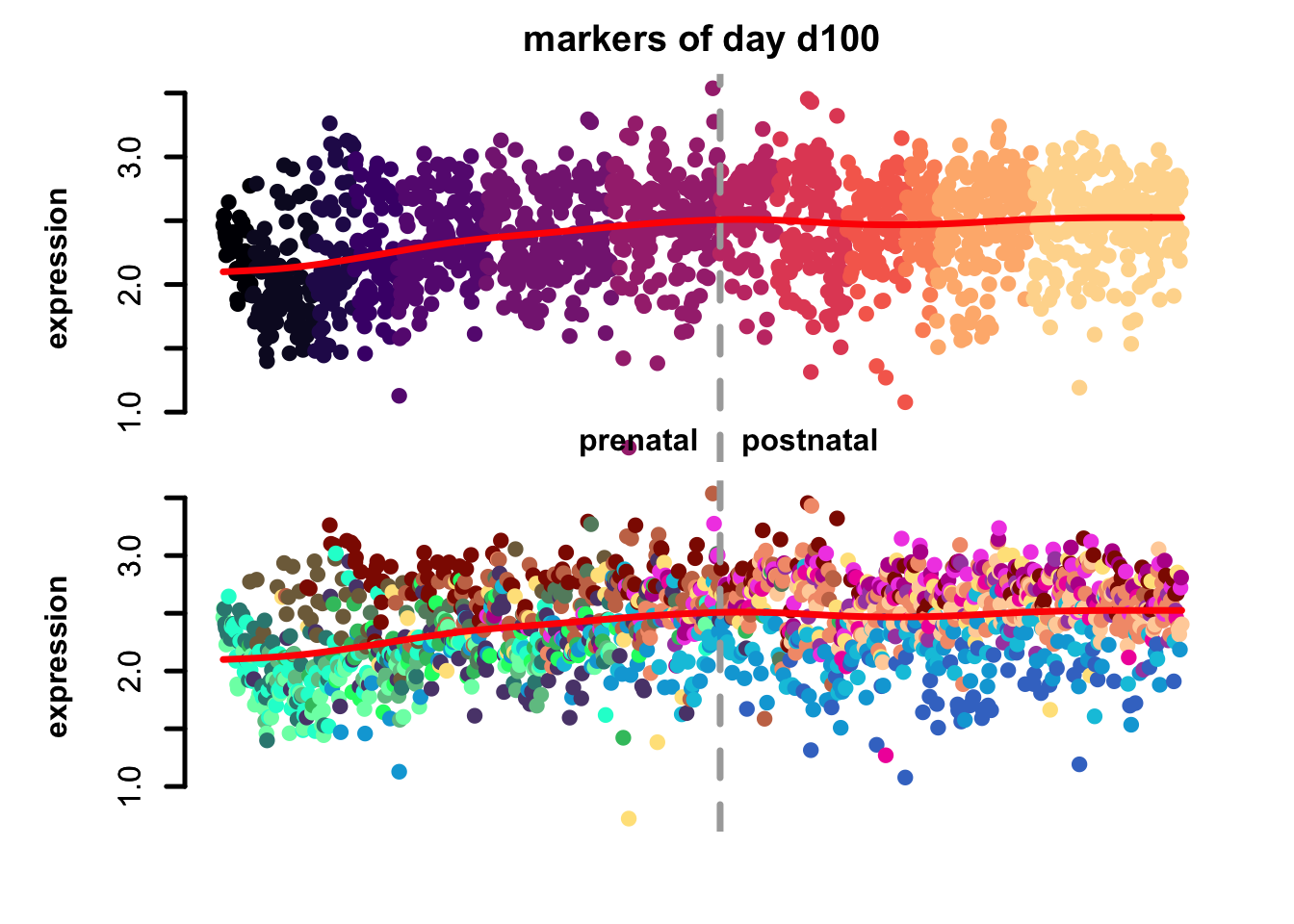
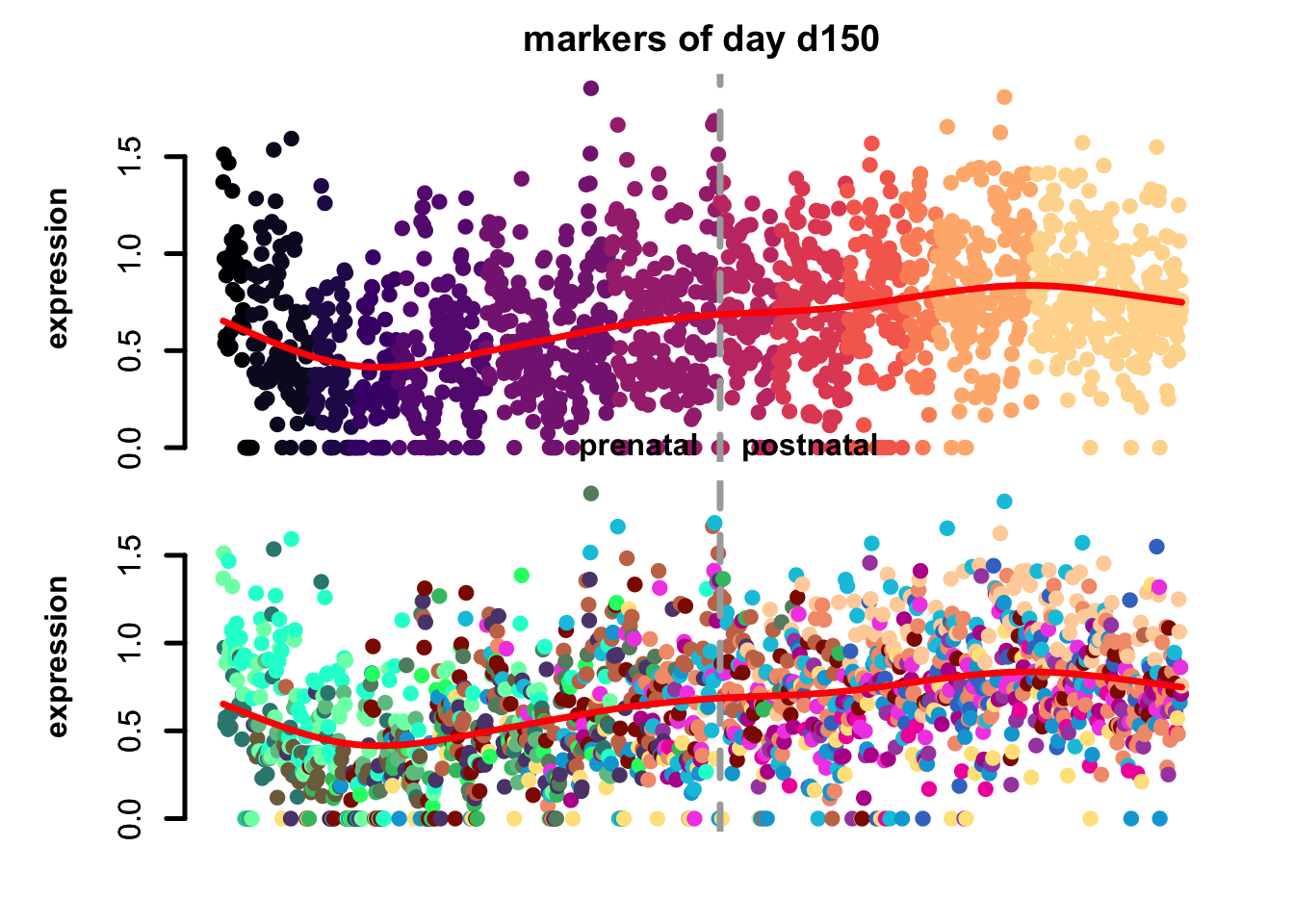
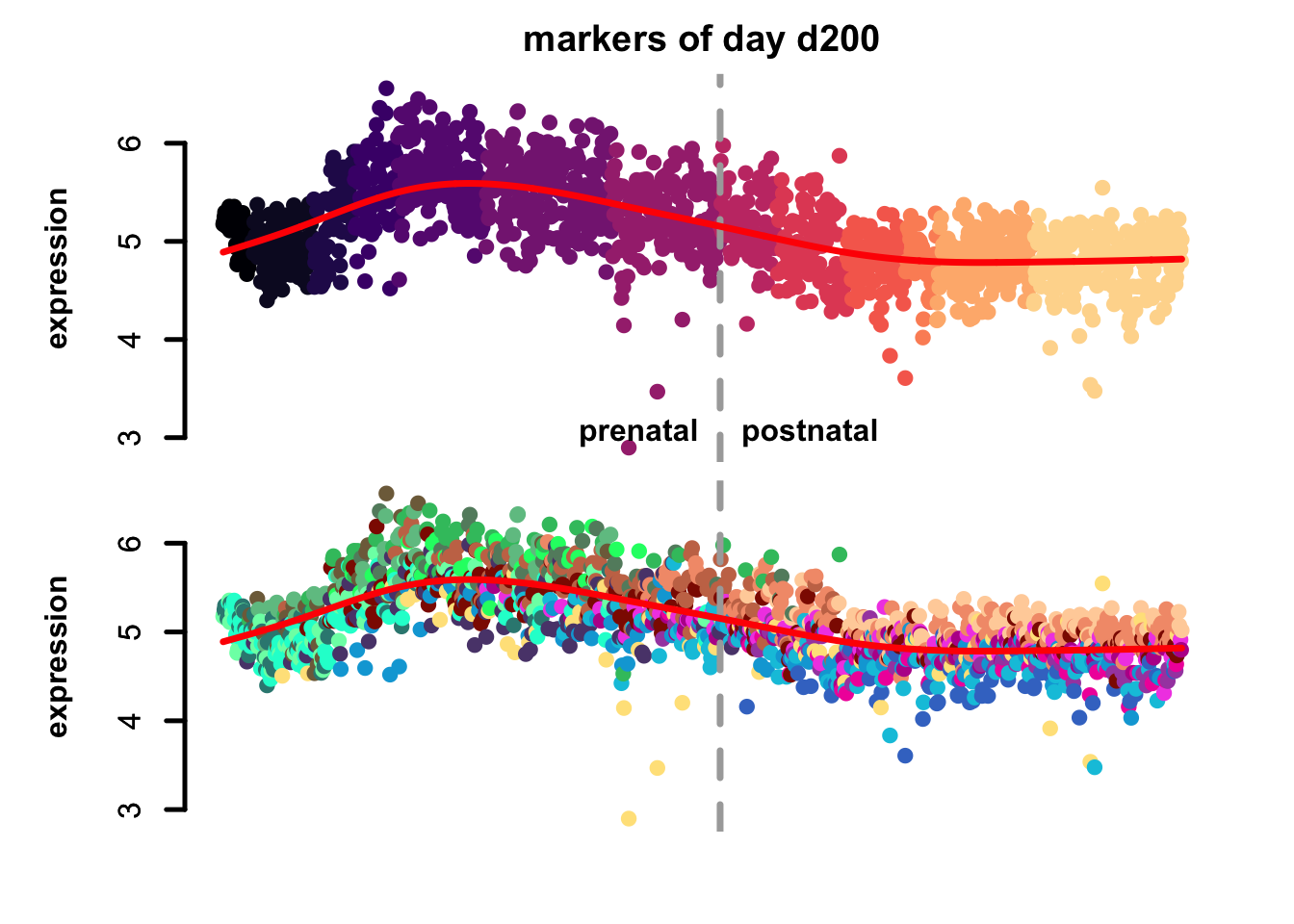
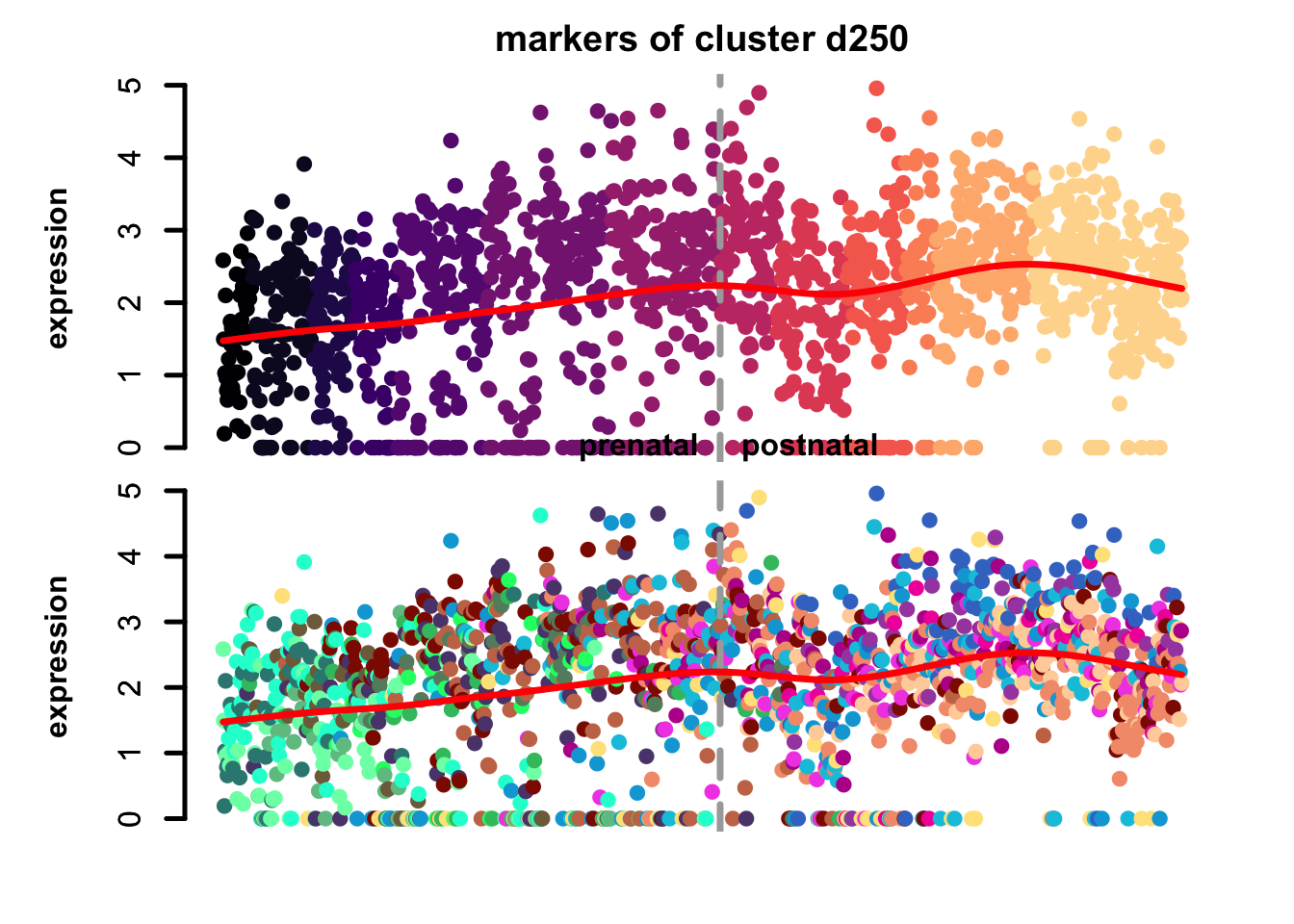
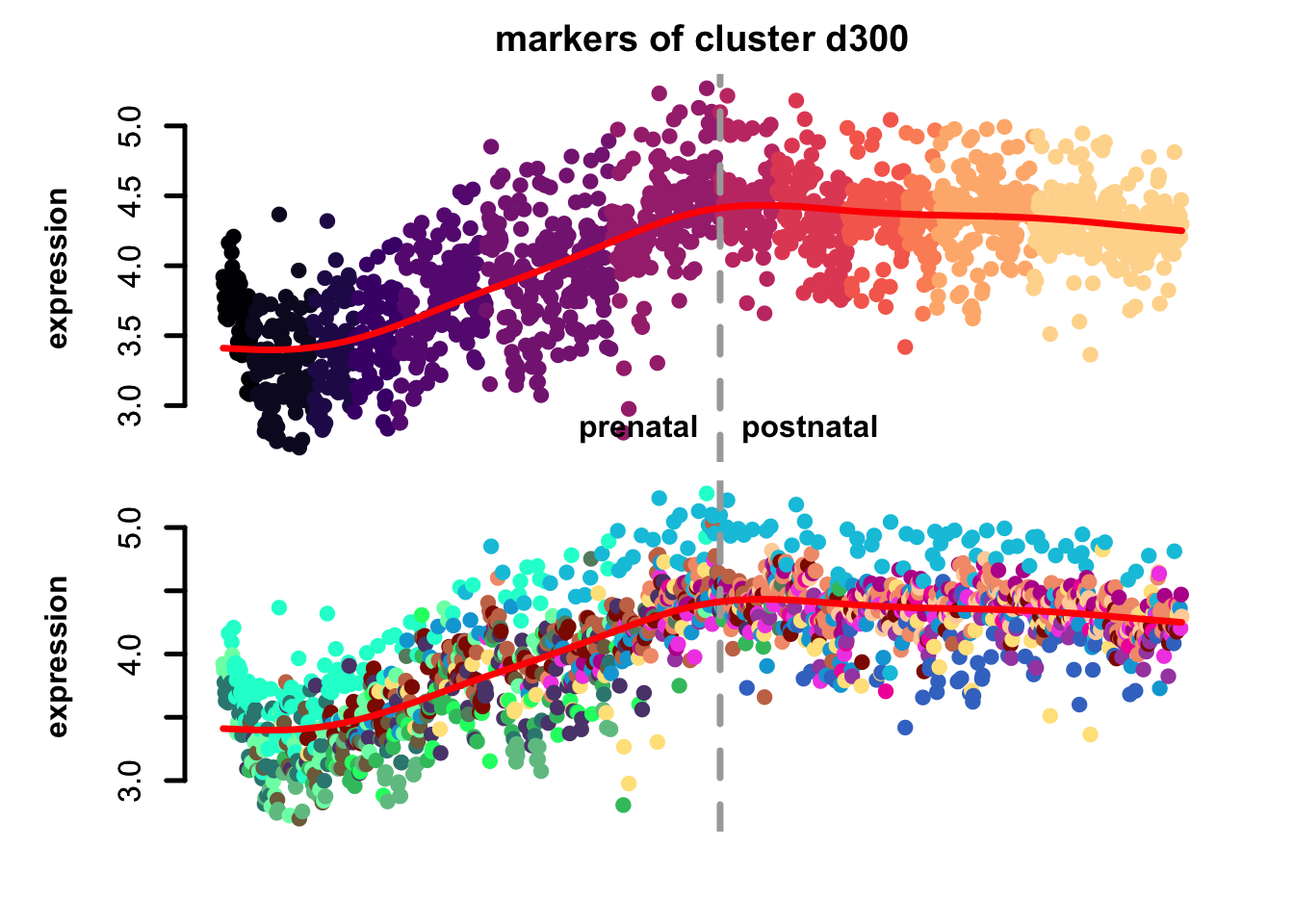
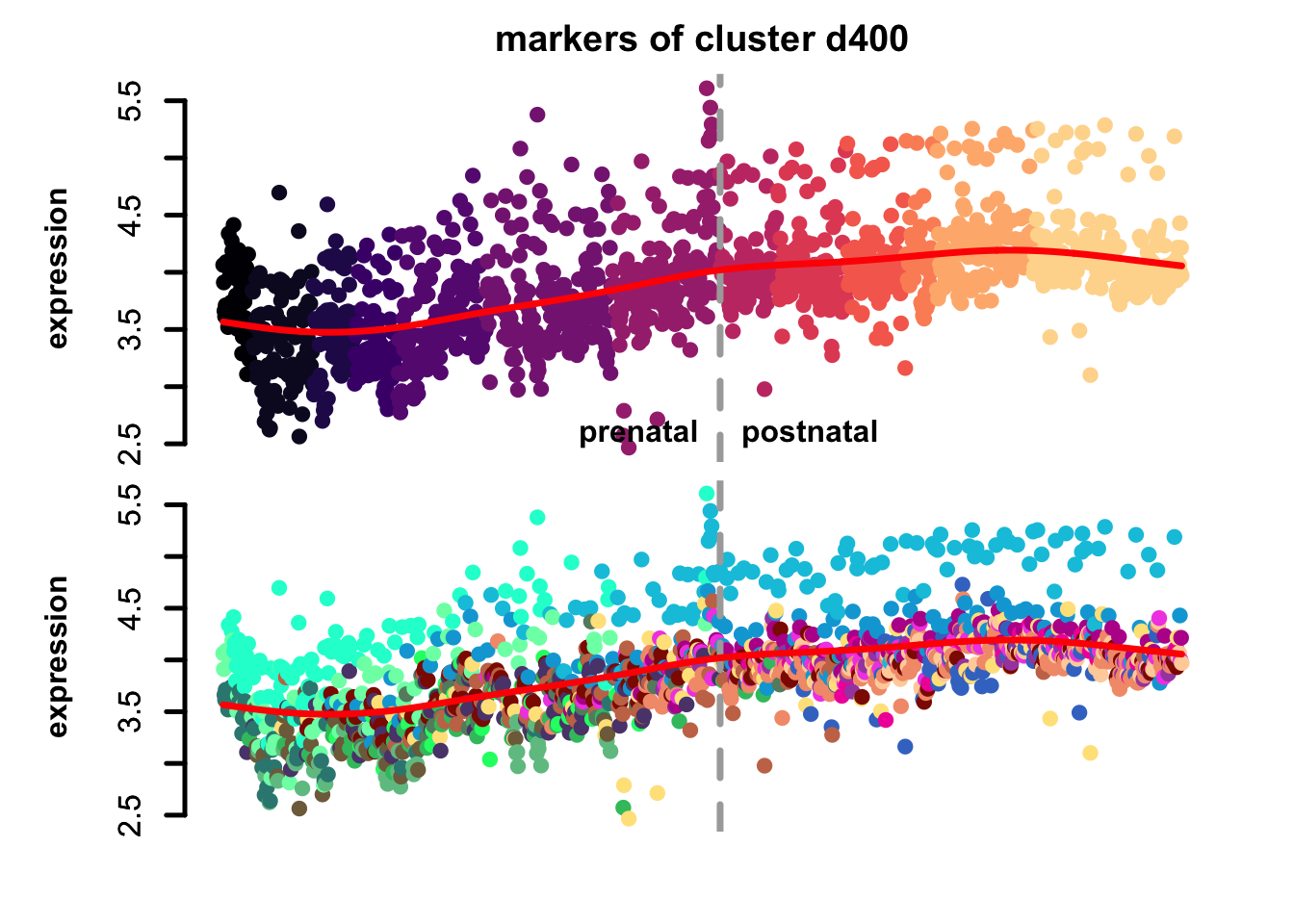
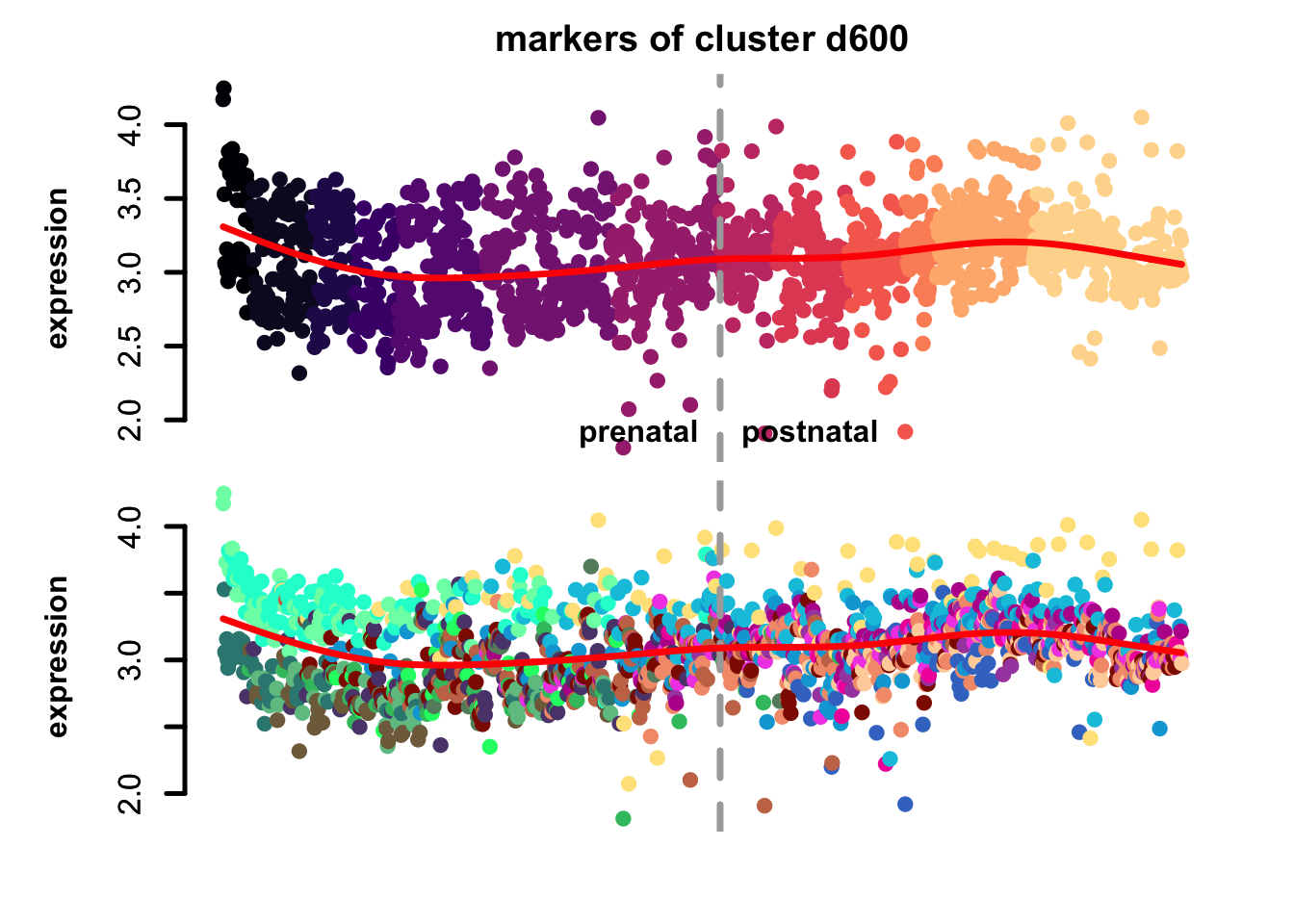
Figure 4.7: eTrace of sample-specific differential genes in corticogenesis.
From this analysis we can appreciate how genes differentially expressed in the different samples are expressed in our reference. Marker genes of organoids from the early time points decrease their expression over time, particularly those of day 25. From day 75 to day 200 we notice that the differentially expressed genes are mainly neuronal, and in particular for day 200, and they are highly expressed in immature neurons, decreasing along maturation. Interestingly, differentially expressed genes in days 300 and 400 are indeed more expressed by astrocytes and increase over time, while those specific for day 600 are higher in radial glia cells and microglia, which usually hints to a stress response (as microglia shouldn’t populate these organoids).